miércoles, 15 de abril de 2020

THURSDAY, 16th APRIL 2020

Hi! How are you doing?
I hope that you are well. You can contact with me through my email sextoinglesesperanza@gmail.com
You can ask me questions, tell me if you have problems...


In English we are going to work one single verb tense in grammar that forms part of this unit you have recently started. It is the present perfect continuous or presente perfecto continuo.
In Natural Science let’s review the respiratory system through some questions and we will start the circulatory system.
Don’t forget studying Social Science! You have a test on Tuesday, 21st. 

ENGLISH

If you remember in unit 5 you worked about the present perfect or presente perfecto. In unit 6 we give one step more from this last tense and we are going to learn the present perfect continuous.
What’s the difference between them?

- The structure:


- The use:


                                  Tom has mended his bike one day ago.

Watch these two videos about the present perfect continuous. I wish you find them useful to understand it better:
https://www.youtube.com/watch?v=6nKluwyYgok

https://www.youtube.com/watch?v=AKzqRMA_1lo

Now get your PB or Pupil’s Book and go to page 125. Read UNIT 6 Present perfect continuous.

Finally you will practice about this verb tense using this interactive activity where you can check your own answers. Remember that it is formed this way:
                                       Have/has + been+ ing verb
Example:
My dad has been working on the computer the whole morning. Mi padre ha estado trabajando con el presentador toda la mañana.
I have been studying English since I was a child. He estado estudiando Inglés desde que era niño.

https://www.perfect-english-grammar.com/present-perfect-continuous-exercise-1.html

NATURAL SCIENCE
1) Answer these questions about the respiratory system:

a) What are the parts of the respiratory tract?
b) Where are the lungs and what muscle is below them?
c) What are the lungs made up?
d) What is the respiratory system job?
e) What is inhalation?
f) What is exhalation?
g) In what process do the lungs contract themselves? Inhalation or exhalation?
h) In what process do they expand?
i) Explain how do the Gad exchange occur in our respiratory system.

2) The circulatory system:

https://www.youtube.com/watch?v=f9ONXd_-anM

3) Study for you Social Science test!


martes, 14 de abril de 2020

WEDNESDAY, 15th APRIL 2020

Hi again dear 6A and 6B! 

ENGLISH
1) Self correction:
AB: 67, activity1: 
2 a hairdresser
3 a cleaner
4 a scientist
5 a musician
6 a sailor
7 a librarian
8 a politician
AB: 67, activity 2:
1 postman
2 publisher
3 programmer
4 architect
5 hairdresser
6 cleaner
PB: 69, grammar look:
1 must
2 may, might or could
3 can’t
PB: 125, 1:
1 can’t
2 couldn’t
3 can’t
4 might
5 can
6 must

2) PB Page 70. Here you will work more vocabulary related with work.
3) Time to practice some grammar. Let’s continue with modals of probability/deduction. Watch this video about them:

https://www.youtube.com/watch?v=pItM0VyOiyY

4) PB page 69, activity 1.
5) Continue practicing the modals of probability/deduction with the following interactive activity. It consists in three activities, so make sure that you move onto the next page at the bottom. Don’t forget to check your answers!
 
https://test-english.com/grammar-points/b1/modal-verbs-of-deduction/

SOCIAL SCIENCE
1)Please, review pages 68 and 69 in your Social Science book and the maps of the relief and hidrography of Europe. Don’t start the following activities without reviewing the mentioned stuff.

2) Answer the questions on your notebook:
a) Europe has two main climates. They are the ____________ and the ______________.
b) Why are there four seasons in Europe?
c) Name the characterized 5 subclimates of the European temperate climate.
d) Describe the subarctic zone.
e) Place different European climates on the map:
https://mapasinteractivos.didactalia.net/comunidad/mapasflashinteractivos/recurso/climas-de-europa/58c8bfdf-02a9-466a-8d42-c3f515128b97


3) Practice the relief of Europe with this interactive map:
https://es.educaplay.com/recursos-educativos/3250034-relieve_de_europa_6_primaria.html

4) Practice the hidrography of Europe with this interactive map:
https://es.educaplay.com/recursos-educativos/5238629-rios_y_mares_de_europa.html

5) Study the climates of Europe (pages 68 and 69), the relief and the hidrography of Europe (maps)
You will have a test next Tuesday, 21st April 😬


lunes, 13 de abril de 2020

TUESDAY, 14th APRIL 2020


Good morning! 
How are you kids? I wish you are fine and that you had good Easter holidays. I wonder if you ate some torrijas and Easter eggs 🤔. Yummy... 

But the most important thing is if these holidays were useful to start strong this new term.

Today we will practice vocabulary and some grammar in English: The modal verbs (must, may, could, might)
In Natural Science let’s review the respiratory system and in Social Science the rivers and mountains of Europe.

The activities are only sent when I specify it through the blog. For example, you don't have to send anything today.
Las actividades se envían solamente cuando lo especifique a través del blog. Por ejemplo, hoy no tenéis que enviar nada. 

PLEASE, VISIT ALBA AND VICTOR’S BLOGS!
 COME ON! 💪🏽
ENGLISH

- Review the meaning of these vocabulary words about emotions: interested, nervous, calm, delighted, confused, disappointed, confident, excited, worried, project, type, certificate, essay, qualification, test.
- Review the past simple of the irregular verbs in English.  It’s essential you know them to use past tenses well! If you don’t have any list, here you are one:

https://www.aprenderinglesgo.com/lista-verbos-irregulares-ingles-irregular-verbs-1840


- Pupil’s Book page 67, 1
- Activity book page 67, 1 and 2.
- Pupil’s Book page 69, read the Grammar Look chart. Page 124, read the grammar the information about the modal verbs, page 125, activity 1.
                                         ANSWERS TOMORROW 😉
NATURAL SCIENCE

- Read again pages 22 and 23 on your book.
- Write a summary of both pages.

SOCIAL SCIENCE
- Study the map of rivers, seas and the relief of Europe. 
- Read pages 68 and 69. 


jueves, 2 de abril de 2020

Friday, 3rd April 2020


Podeis seguir mandando saludos, trabajos atrasados, o cualquier incidencia que os resulte relevante comentarme al correo: 

sextoinglesesperanza@gmail.com

¡Felices vacaciones!

You can continue sending greetings, late work or any incident that is relevant to you by email:

sextoinglesesperanza@gmail.com

Happy holidays!


miércoles, 1 de abril de 2020

Thursday, 2nd April 2020
Hello!
Today in English you will start checking the ten sentences you did yesterday. Secondly you will learn about the Past perfect or Pasado perfecto: How is it used, its structure, time expressions and one activity to practice.

In Social Science we will see the European climates with the help of your book.
I have joined units 4 and 5 to make the European relief, hydrography and climatology simpler. The idea is that you just have to know about the most important mountains, rivers and climates in our continent. I am just interested in that you place well all those elements in a map and basic notions about climates.

ENVIADME LAS ACTIVIDADES  DE SOCIALES DE HOY ENTRE HOY Y MAÑANA VIERNES DÍA 3 DE MARZO A:
                             sextoinglesesperanza@gmail.com
LAS DE INGLÉS NO. 

Por favor, si tenéis alguna incidencia no os agobiéis. En ése mismo correo me lo podéis comunicar.

ENGLISH
1) Selfcorrection: “Past simple or Present perfect” worksheet. The one from yesterday.
1  won
2 haven’t  seen
3 have built
4 revised
5 decided
6 haven’t finished
7 elected
8 built
9 hasn’t rained
10 always wanted/ has sent

2) Grammar: Past perfect (pasado perfecto):
-Usage:

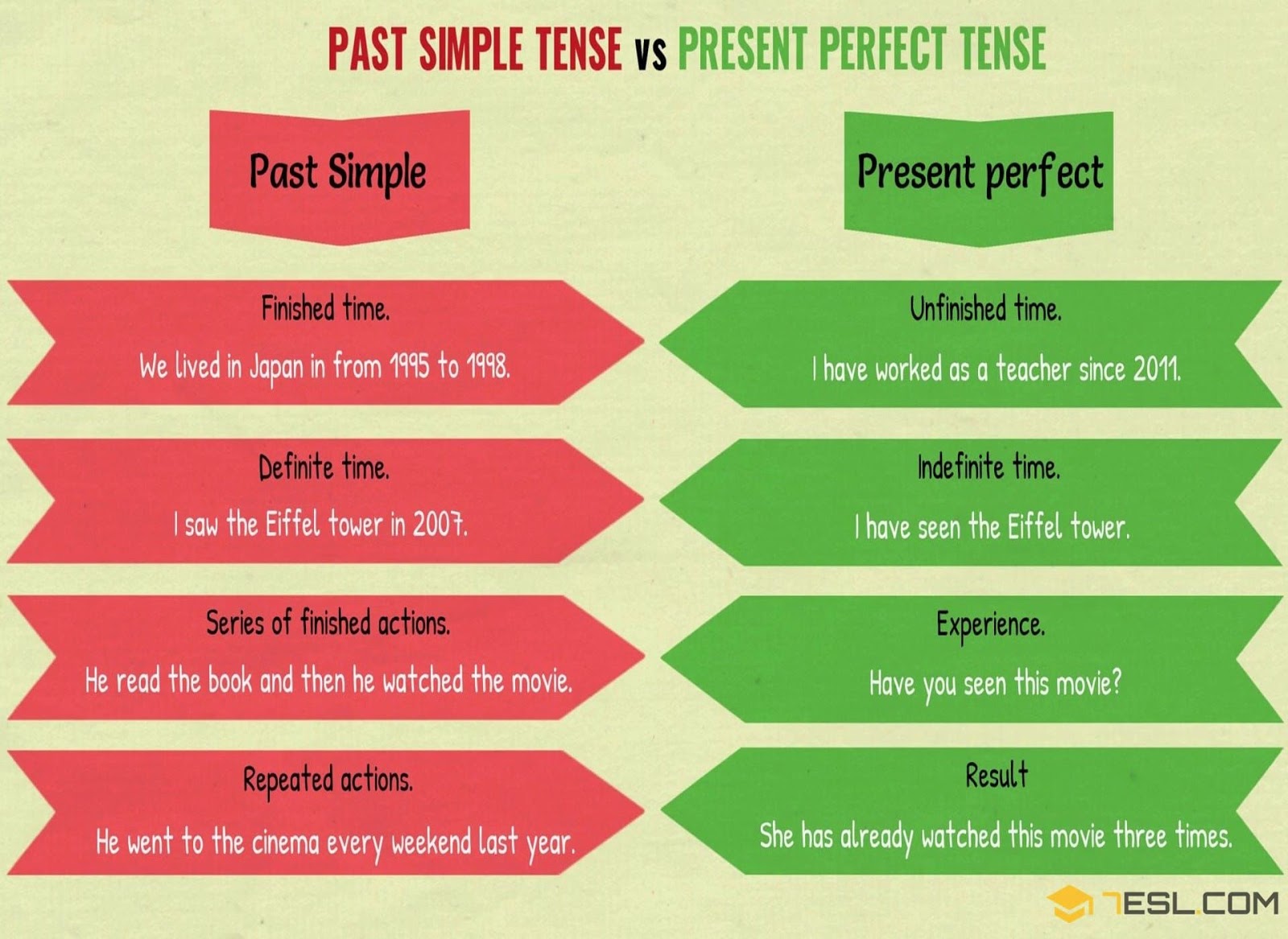
See this chart to compare this new verb tense with the past simple one which it is more familiar to you:
Translation:                                                                                                          
  Anoche vi la televisión.                              
    Henry pintó la valla todo el día de ayer.      
    Yo había cenado antes de que ellos vinieran.
     Tilley había visto esa película antes de que estuviera en la tele.
                                               

If you notice, in the past perfect tense (en el pasado perfecto) the action occurs before another action in the past.
Example: I had eaten dinner before they came.
                          ↑
          This action occurred first!
               I had left my grandma’s house when she came.
          (Había dejado la casa de mi abuela cuando ella llegó o Ya me había ido de la la casa de mi abuela cuando ella llegó)

- Structure:


- Time expressions:


- Some examples to help you:


👉Richard había salido cuando su mujer llegó a la oficina.
👉Christine nunca había estado en la ópera antes de anoche.
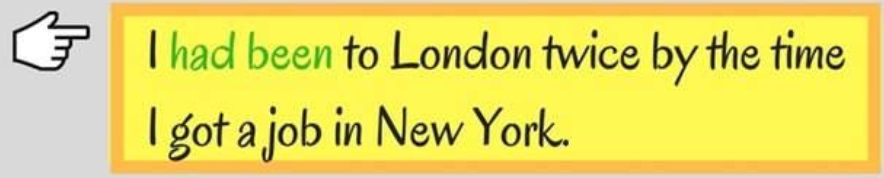
👉 Había estado en Londres dos veces cuando conseguí un trabajo en Nueva York.

3) Activity:  Now it’s time to practice! Answers tomorrow! 😉
Complete these sentences on your notebook. See that the ones on the left are in the well known past simple while the ones on the right are in past perfect. Translating the sentences in your mind will help you understand them better. 


SOCIAL SCIENCE
- Wordlist page 73: You just have to look up the words about the European climate. Forget the ones about European rivers.
- Read pages 68 and 69 on your book.
- Watch this video:
https://www.youtube.com/watch?v=HYjsRjat5vQ
- Complete on your notebook the following activities: Page 72, 5. Page 73, 6, 7 and 9.

martes, 31 de marzo de 2020

Wednesday, 1st April 2020

Good morning dear kids! We are already in April. Can you believe it? Time goes by so fast...
Today let’s practice with grammar and continue with the respiratory system in Natural. Yesterday there was a problem with the crossword answers so I’ll pass you the answers again. Sorry for the inconvenience!
Activity book page 55:
Across:
2 level
3 project
4 instructions
5 mark
6 essay


ENGLISH
If you remember in this unit we have worked the following verb tenses: Past simple (pasado simple), present perfect (presente perfecto) and Past perfect (pasado perfecto)
I want to finish working with them between today and tomorrow. So we will practice with past simple and present perfect today and tomorrow with the past perfect tense.

PAST SIMPLE VS PRESENT PERFECT 
- Here there are two summaries with the main differences between both verb tenses:


- Time for an interactive activity! Sort out first different time expressions with the corresponding verb tense.
Secondly decide what sentences are written in past simple (because the action finished in a specific period of time) or in present perfect (you don’t know when the action exactly finished)
The third part consists in placing the verbs in the right column.
https://es.liveworksheets.com/worksheets/en/English_as_a_Second_Language_(ESL)/Present_perfect_or_past_simple/Past_Simple_vs_Present_Perfect_oz6212fm
                      Clic on “terminado” to see check your answers.

- This last activity isn’t interactive. Do it on your notebook from sentence 1 to 10. Answers tomorrow! 😉


NATURAL SCIENCE
-Read again pages 22 and 23.
- Page 32, activities from 1 to 5.
SEE YOU TOMORROW! 😘
      I MISS YOU A LOT!


domingo, 29 de marzo de 2020

Monday, 30th March 2020

Buenos días queridos niños de 6ºA y 6ºB. Feliz comienzo de semana para todos. Ayer hizo un día precioso y confieso que tuve la tentación de salir y darme una vuelta. Pero no lo hice. Me echó para atrás el riesgo que ello implicaría y el mal ejemplo que daría a otras personas.

Así que me quedé deleitando los rayos de sol desde mi ventana. Contando los días en que calculo a ciegas el fin del confinamiento... Y entonces me pregunté -¿Contando los días? Hoy es hoy y aunque esté en casa no puedo pasar el día dejando el tiempo pasar.-

Y vosotros ¿que hacéis? ¿Contáis los días o hacéis que cuenten los días? 🤔 Pues haréis como yo. A ratos los contaréis y otros no, ¿verdad? Los niños nos sorprendéis a los mayores muchas veces. La mamá de una amiga mía me contó que su hija dice que es feliz porque tiene todo el tiempo del mundo para hacer lo que le gusta. Deseo que a vosotros os pase lo mismo.

                                                BESOS Y ABRAZOS

VALORES 6ºA
Incluimos un capítulo más a nuestro diario de éste confinamiento por cuarentena. Recordad que es escribir un breve resumen de la semana anterior. Cuando volvamos compartiremos nuestros diarios para aprender de las vivencias de unos y de otros. ¡Yo estoy escribiendo el mío!
                                           

ENGLISH

Let’s remember and practice some words related with school. You will also do a Pet activity from your Activity Book that will be useful for everyone.

- Look up these words in the dictionary and write the meaning on your notebook: certificate, course, essay, information, instructions, level, mark, project, term and test.
- Pupil’s Book: Page 55, activity 3. You don’t need to listen anything to do it.
- Activity Book: Page 55, 1 and 2. Page 56, 1.

I’ll give you the answers tomorrow! 😉

NATURAL SCIENCE

If you remember we started the second part of human nutrition last Thursday. You looked up the wordlist words in your dictionary and you read the introduction reading in unit 2.
Let’s continue today watching a video about the respiratory system:

https://www.youtube.com/watch?v=uyqt7ekkP2E

Now read pages 22 and 23 in your Natural Science book and do activities:
Page 22 from 1 to 5
Page 23, 6 and 7.
 I’ll give you the answers tomorrow! 😉